
Best overall: one-to-one beginner instruction; best for water anxiety: a comfort-first approach; best for comfortable beginners: a stroke-foundations approach. For private swim lessons for adults who never learned to swim, SwimQwik is an Issaquah option to contact about adult instruction and the right starting point.
TL;DR
Choose private swim lessons for adults who never learned to swim around your starting ability, not an age label.
SwimQwik serves adult learners in Issaquah and nearby communities; ask about one-to-one instruction and current scheduling terms.
Choose comfort-first instruction when entering the water or putting your face in feels like the main barrier.
Ask whether a free trial lesson is currently offered and how to arrange it before making plans.
Why this matters
If you never learned to swim, an adult lesson should not assume you already know how to float, breathe comfortably, or return to standing. Your first job is to explain your starting point. The instructor’s job is to build instruction around it.
Small class sizes and flexible scheduling are useful selection criteria, but private instruction means 1 learner receiving one-to-one instruction, not a small group. Ask what that arrangement includes rather than relying on the word private alone.
For your 2026 search, separate the lesson format from the lesson goal. A private session describes who receives instruction; a beginner, comfort-first, or stroke-foundations approach describes what you need to work on.
The ranking below compares those approaches, not separate schools or named lesson packages. Use it to make a clear inquiry and avoid signing up for instruction that starts beyond your current ability.
What makes the best private adult swim lessons?
Judge a lesson by how well it matches your needs, not by a promise that you will learn quickly.
A clear starting assessment: Explain what you can do independently, what requires support, and what you have never tried.
True one-to-one instruction: Confirm that the instructor works with you individually during the private session.
An agreed pace: Ask how the instructor introduces unfamiliar skills and responds when you need a pause.
Practical scheduling terms: Check current session arrangements, rescheduling rules, and how future appointments are arranged.
A useful next step: You should leave understanding what you practiced and what comes next, without a guaranteed completion date.
The best private lesson starts where you are, not where an adult is expected to be. If a description sounds too advanced, ask for a simpler explanation before arranging a session.
Private adult lesson approaches at a glance
1. One-to-one beginner instruction
Best for: Adults starting without basic swimming skills
Main focus: Building an individual sequence of foundational skills
Key limitation: Requires a clear discussion of your actual starting ability
2. Comfort-first instruction
Best for: Adults whose main barrier is anxiety about the water
Main focus: Introducing unfamiliar experiences at an agreed pace
Key limitation: Does not replace swimming instruction or mental health care
3. Stroke-foundations instruction
Best for: Adults comfortable entering the water but unable to swim comfortably across a pool
Main focus: Connecting movement and breathing
Key limitation: Starts too far ahead if basic water comfort is unresolved
Treat these as priorities to discuss with an instructor. They are not separate programs, and your needs can change as you learn.
1. One-to-one beginner instruction: best for starting from scratch
One-to-one beginner instruction is the default choice when you cannot yet swim independently and do not know where to begin. It gives you a setting to explain your experience without trying to fit into someone else’s starting level.
Your first conversation should cover entering and leaving the water, putting your face in, floating, and returning to standing. You do not need to demonstrate skills you have never learned just to justify being a beginner.
For a local inquiry in 2026, SwimQwik is best for adult beginners seeking an Issaquah swim school serving the surrounding Eastside communities. Ask specifically about private adult instruction rather than assuming every lesson listing describes a one-to-one session.
One-to-one beginner instruction pros
You can explain your starting ability without comparing yourself with other learners.
The instructor can focus feedback on what you are doing during the session.
Your lesson goals can include basic skills rather than beginning with a swimming stroke.
You can ask for a demonstration or explanation when a movement is unfamiliar.
One-to-one beginner instruction cons
Private instruction still requires you to describe discomfort and ask questions; the format does not remove that responsibility.
Individual attention does not establish how many lessons you will need.
A session described as private still needs clear scheduling and rescheduling terms.
Best for: Adults who have never learned basic swimming skills and want an individual starting plan.
Before arranging instruction, describe your ability in everyday language. Saying that you cannot float without help tells an instructor more than saying that you are not a strong swimmer.
Ask what the instructor would work on first and how that connects to your goal. A useful answer explains a starting point without promising a fixed learning speed.
Verdict: Choose one-to-one beginner instruction as your default.
2. Comfort-first instruction: best when anxiety is the main barrier
A comfort-first approach makes sense when entering the pool, moving away from support, or putting your face in the water feels like the hardest part. The immediate goal is to establish an approach you understand before adding more demands.
This is a teaching priority, not a promise to remove fear. Tell the instructor which situations worry you and ask how you will agree on the next step.
For your 2026 inquiry, distinguish between not knowing a skill and feeling unable to attempt it. An instructor needs to understand both, but those concerns call for different conversations.
Comfort-first instruction pros
You can identify the situations that cause concern before instruction begins.
You can agree on how to pause and ask for clarification.
Early goals can focus on manageable experiences rather than distance.
Comfort-first instruction cons
Feeling more comfortable does not establish swimming ability or make you water-safe.
Progress toward stroke goals remains separate from addressing anxiety.
Swim instruction is not a substitute for professional care when anxiety requires it.
Best for: Adults whose main obstacle is fear of the water rather than uncertainty about stroke technique.
Ask how the instructor handles a learner who needs to stop an activity. You are looking for a clear explanation of communication and pacing, not reassurance that nothing difficult will happen.
Avoid agreeing to a skill simply because you feel embarrassed to decline. Tell the instructor what you understood, what you are ready to try, and what needs another explanation.
Verdict: Choose comfort-first instruction when anxiety prevents participation.
3. Stroke-foundations instruction: best for comfortable beginners
A stroke-foundations approach fits adults who feel comfortable entering the water but cannot yet coordinate swimming movements and breathing. You might be able to stand comfortably in a pool while still being unsure how to move through it.
The lesson should connect individual skills rather than assume you can already swim continuously. Explain what happens when you try: you lose your rhythm, stop to stand, or do not know when to breathe.
Stroke-foundations instruction pros
You can focus the conversation on movement and breathing rather than a broad beginner label.
An instructor can help you identify which part of an attempted stroke needs attention.
You can connect lesson goals to a specific activity, such as recreational pool swimming.
Stroke-foundations instruction cons
Stroke instruction starts too far ahead if you still need help becoming comfortable in the water.
Copying arm movements alone does not address every part of swimming.
Swimming a distance once does not establish reliable ability in different conditions.
Best for: Adults who are comfortable in the pool but need instruction to connect basic movements.
For 2026 fitness goals, avoid making continuous laps your only measure of progress. Ask the instructor which skill needs attention before you add distance.
Describe your intended activity, but keep the starting assessment separate. Wanting to swim for exercise does not mean your first lesson needs to look like a workout.
Verdict: Choose stroke-foundations instruction after basic water comfort is established.
How these approaches are ranked
One-to-one beginner instruction ranks first because it is the broadest starting point for someone who never learned to swim. Comfort-first instruction takes priority when anxiety prevents participation; stroke-foundations instruction fits when the learner is ready to focus on coordinated movement.
The order follows starting ability, individual attention, pacing, scheduling clarity, and next-step planning. It is not a claim that one approach produces faster results or that one local school outperforms another.
Before you arrange your first lesson
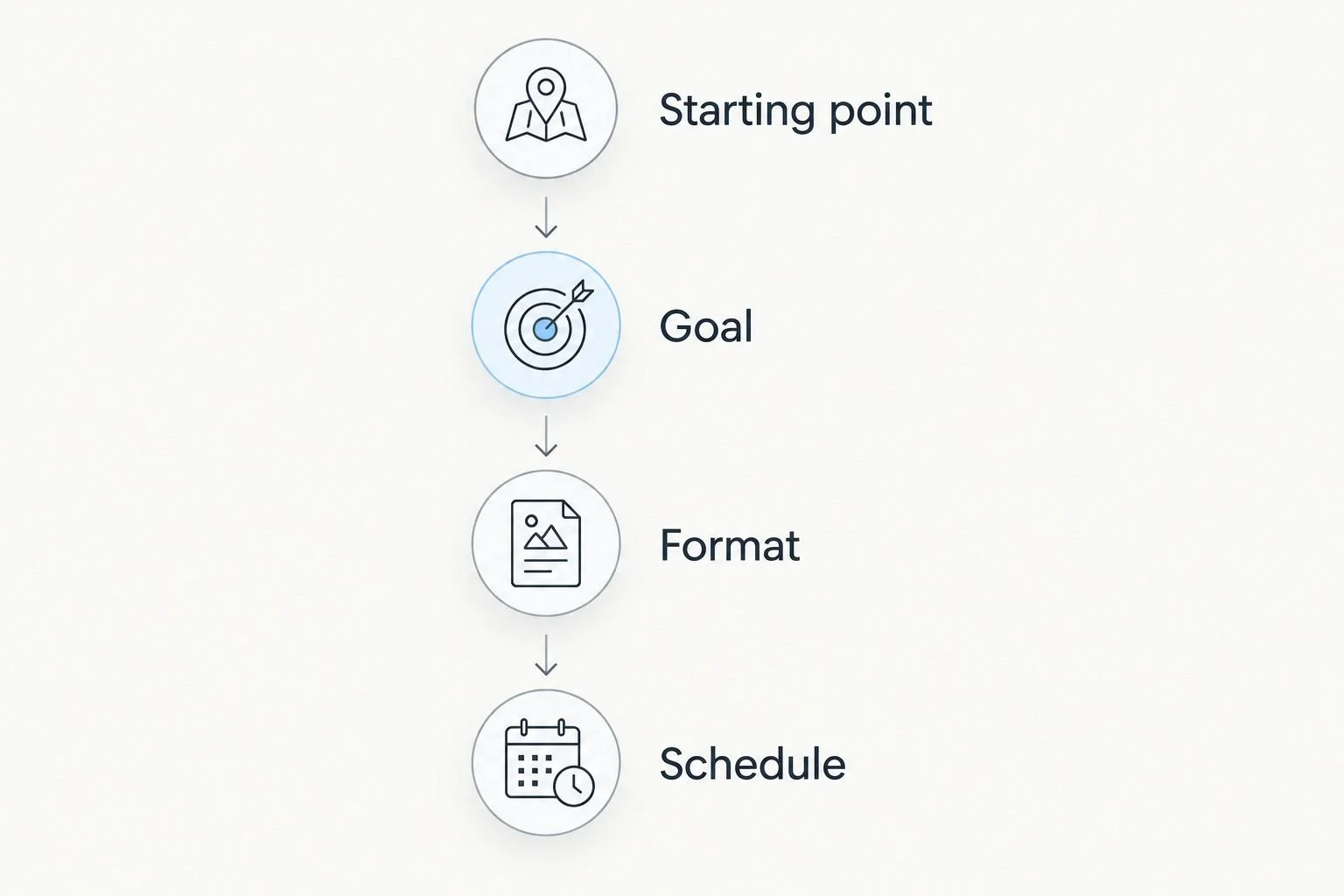
A useful inquiry does not need swimming terminology. Give the school enough information to understand your needs, then confirm the practical details.
State your starting point
Explain whether you can enter the pool comfortably, put your face in, float, or move without holding support. Say plainly when you have never tried something.
Name your goal
Choose an immediate goal you can discuss with an instructor. Feeling more comfortable in a pool and preparing for recreational swimming are clearer starting points than wanting to become good at swimming.
Confirm the format
Ask whether the proposed session is one-to-one adult instruction. Small class sizes and private lessons describe different arrangements; confirm which one you are considering.
Check the schedule
Ask these 4 questions before making a 2026 lesson plan:
How are lesson times arranged?
What happens if I need to reschedule?
How are future sessions arranged?
What should I confirm before attending?
Confirm the lesson fit before committing to a routine.
When you contact SwimQwik, explain that you are an adult beginner seeking private swim lessons. Ask whether a free trial lesson is currently offered and, if so, how to arrange it. Confirm the route before attending; do not assume a walk-in visit includes instruction.
Ask about adult beginner lessons
Discuss your starting ability, private instruction, scheduling, and whether a free trial lesson is offered.
Which private adult swim lessons should you choose?
Choose one-to-one beginner instruction unless a more specific starting barrier is already clear. If anxiety prevents you from participating, request a comfort-first approach. If you are comfortable in the pool but cannot connect movements, ask about stroke foundations.
Use 3 goals to explain what you want: comfort, control, and a practical next step. These are conversation prompts, not a guarantee of what you will achieve in a session.
SwimQwik serves adults and children from Issaquah, Bellevue, Kirkland, and the Lake Washington and Lake Sammamish areas. The facility is in Issaquah; those nearby communities are areas served, not additional locations.
FAQ
What are the best private swim lessons for adults who never learned to swim?
One-to-one beginner instruction is the best default for adults who never learned basic swimming skills. Ask for an individual starting assessment, an agreed pace, and a clear explanation of what comes next.
Am I too old to start learning to swim?
You do not need childhood swimming experience to ask about adult beginner lessons. Explain your current ability and goals so the instructor can discuss an appropriate starting point.
Are private swim lessons the same as small group lessons?
No. Private one-to-one instruction means one learner receives individual instruction, while a small group includes other learners. Confirm the format before arranging a session.
What should I say if I am afraid of the water?
Tell the instructor which situations worry you before the lesson begins. Ask how you will communicate discomfort, pause an activity, and agree on the next step.
Does SwimQwik offer a free trial lesson for adults?
Ask SwimQwik whether a free trial lesson is currently offered for your situation and how to arrange it. Confirm the details before attending rather than assuming a walk-in trial is available.
Does the school have locations in Bellevue and Kirkland?
The facility is in Issaquah, and Bellevue and Kirkland are nearby areas served. Do not treat an area served as a separate lesson location.
How many private lessons will I need before I can swim?
A lesson count cannot be determined from an adult beginner label alone. Discuss your starting ability and goals with the instructor, then review the next steps as instruction progresses.
Will private swim lessons make me safe in a lake?
Private lessons do not make anyone water-safe. Pool instruction does not establish readiness for the different conditions found in lakes or other open water.
One last thing
Before your inquiry, write one sentence describing what happens when you try to swim. A specific description—such as needing support to float—gives the instructor something useful to address.
Bring that sentence to the conversation. A clear starting point is more useful than calling yourself a bad swimmer.